
.jpeg?width=752&height=500&crop=752:500)
Surrey residents could face rising council tax bills and deep financial uncertainty under plans to overhaul local government and councillors say people are already “really angry” about it.
At a West Surrey joint committee meeting on April 14, politicians warned that changes to council tax under the new system could hit some households harder than others, at a time when many are already struggling with the cost of living.
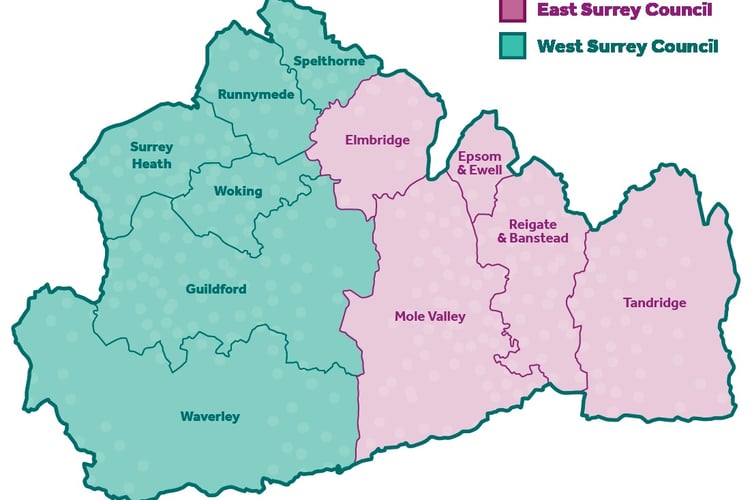
Plans to “harmonise” council tax across the two new authorities (East and West Surrey) mean some areas could see increases above the usual 5 percent cap. Cllr Joanne Sexton said the issue is coming up “all the time” on the doorstep and asked what protections would be in place for residents facing sharp rises.

--Photo-by-Matt-Crockett.jpeg?width=209&height=140&crop=209:145,smart&quality=75)
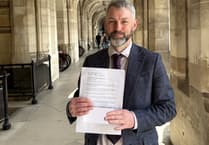
Finance chief Andy Brown confirmed some households could pay more than 5 per cent increases to bring different council tax rates into line. “What you won’t see is an average increase across West Surrey that breaches the referendum principles,” he said. “But within that you may see areas… higher than the 5 per cent and some lower.”
Modelling has already been done and could be published, but the final call will be made by new “shadow councils” elected in May, ahead of the new system going live in 2027.
West Surrey ‘worse off’
Behind the council tax fears is a bigger concern: that West Surrey is heading into the new system in a much weaker financial position.
Councillors repeatedly warned the west could end up the “poor relation”, inheriting higher debt, greater infrastructure needs and more financial risk.
Cllr Liz Townsend said the scale of the problem is not being taken seriously enough. She said: “I still feel we haven’t emphasised the disparity between East and West and how by virtue of an arbitrary line drawn on a map the people in West Surrey are far more disadvantaged.”.
The Liberal Democrat councillor added: “I’ve been knocking on doors recently and people are really angry about it. I don’t think we’re emphasising how critical the situation is.”
Cllr Catherine Powell echoed those concerns, warning West Surrey is set to inherit “a much worse financial situation” than the east, something she said was not clearly reflected in official papers. The Farnham Residents councillor also raised concerns about infrastructure, saying the west faces specific challenges that are not being properly accounted for.
Debt mountain and government bailout
A major factor is the huge debt linked to Woking Borough Council. The government has already stepped in, promising £500m to help reduce Woking’s borrowing. But even after that, the council is still expected to carry around £1.7bn in debt.
The government, through the Ministry of Housing, Communities and Local Government, has said there is “no reasonable means” for Woking to manage this on its own. So, ongoing national support will be needed. This creates a major risk for the new West Surrey authority which will inherit the problem.
Inequality fears and vulnerable residents
Councillors also raised concerns about how the changes could hit the most vulnerable. Cllr Powell warned that people on lower incomes are likely to be hardest affected by financial pressures but said current equality impact assessments do not fully reflect that.
Cllr Powell also called for a clearer breakdown of how decisions could affect different areas, warning the divide between east and west must not be hidden in “generic statements”. Officials said more detailed equality assessments will be produced alongside future decisions, including budgets.
Confusion over what has been agreed
Adding to concerns, councillors warned official documents risk misleading residents about what has already been decided. Minutes from previous meetings appeared to suggest councillors had agreed to split assets geographically, something members insisted is not the case. They said they had only agreed that assets would need to be split, not how.
With local elections coming up on May 7, councillors called for clearer language to avoid confusion about who is making decisions and when. Officials agreed to tighten up the wording.
“Just a starting point”
Lead council officers stressed that nothing is final yet. Current proposals were described as a “starting point”, with work ongoing to figure out how services, staff and assets will be divided between the two new councils.
Final decisions will be taken by the shadow authorities after the elections, with the new system due to launch in 2027.
Comments
We've recently changed our login process. If you have an account for commenting, you will need to re-register on the login window.
This article has no comments yet. Be the first to leave a comment.