
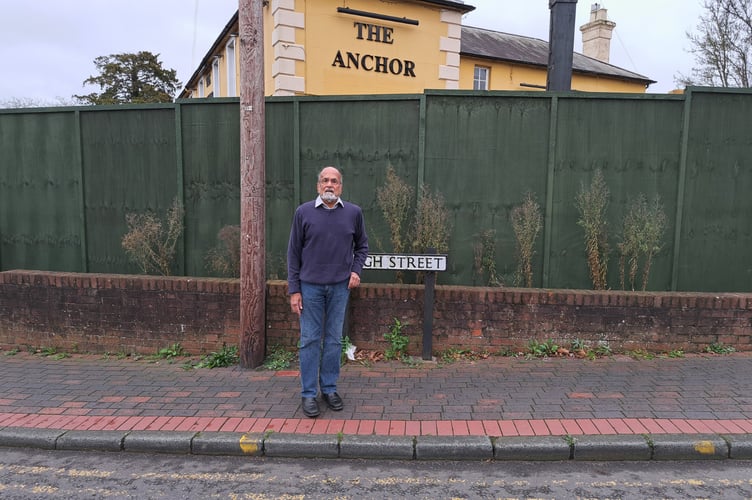
Hassan Akberali, Independent councillor for Knaphill, argues that those elected to the new West Surrey unitary council in May must speak for residents, not party interests
On 7 May, residents will vote in the first election for the new West Surrey unitary council, replacing Surrey County Council and merging Woking Borough Council with Guildford, Runnymede, Spelthorne, Surrey Heath and Waverley.
Local government reorganisation is intended to create efficiencies. However, experience elsewhere shows these savings often take years to appear.




What changes immediately is the loss of local democracy with more centralised decision-making powers.
Woking will move from 10 smaller wards to seven larger ones, each represented by two councillors instead of three.
Fewer councillors will represent more residents, with a much heavier workload. That makes it even more important that residents have a strong local voice accountable to the community — not to party bosses, party politics or party egos.
Also, the same political groups cannot be relied upon to fix Woking's financial problems on joining West Surrey. Those problems are a direct result of the reckless borrowing under the Conservatives, fully supported by Liberal Democrat councillors when in opposition, despite clear warnings from then Independent councillor the late John Bond, as far back as 2016.
Had those warnings not been ridiculed or ignored but taken seriously, Woking would not now be bankrupt with the highest debt of any council in the country.
The simple truth is that the people who got us into this mess by borrowing in your name and gambling with the lives of future generations are not the people to get us out of it.
More importantly, on 1 April 2027, the new West Surrey Council will take on the combined debt of the councils it replaces.
It will not start fresh but will inherit around £4–£4.5bn in debt, comprising Woking's about £2bn, Spelthorne's over £1bn, and others with significant additional liabilities.
Even with the government's temporary support for Woking - £500m towards debt, £92.09m in MRP deferrals, and £58.1m for capitalisation direction - there is a cost to taxpayers.
The government-appointed commissioners, whose generous fees are set by the Ministry and paid by council taxpayers of bankrupt Woking, have acknowledged the obvious: Woking cannot realistically meet its current debt obligations.
Hence the burden will fall on all residents, not on the politicians, commissioners, officials or advisers.
Thus, from day one, West Surrey Council will carry enormous debt-servicing costs and exposure to high-risk investments.
Woking residents should therefore expect further council tax rises, public service cuts, amenity closures, stealth service charges, swerving around potholes, council staff losses, and an increased cost of living.
Independents are unlikely to be a majority on the new council but, as shown in Surrey County Council, play a crucial role, often holding the balance of power and providing scrutiny because broken promises damage trust, increase anxiety, and leave residents disillusioned with politics.
So when Woking joins West Surrey as its highest-debt contributor, it must not be weakened or sidelined, treated as the "poor relation”.
It needs a strong, independent voice — standing up for residents, not party interests.
Comments
We've recently changed our login process. If you have an account for commenting, you will need to re-register on the login window.
This article has no comments yet. Be the first to leave a comment.