
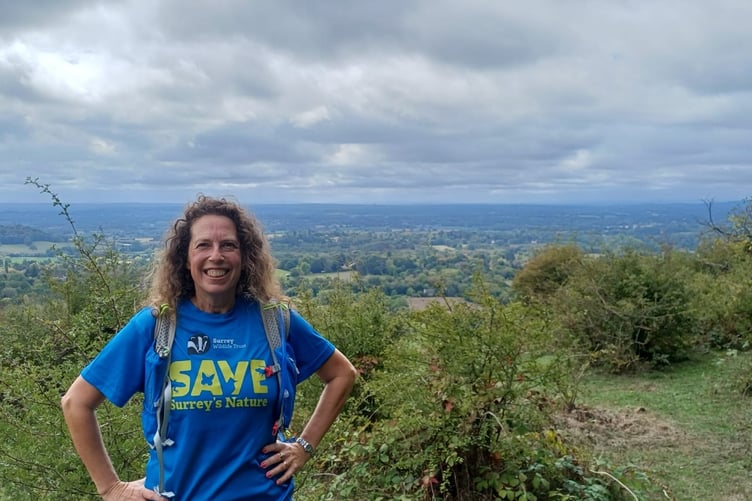
Surrey Wildlife Trust's deputy CEO Catherine Roberts has been walking 130km across the county this week.
The two-day walk, which she started yesterday, will help raise awareness of the beauty and variety of Surrey's landscapes while raising funds for the trust’s work to restore and reconnect precious habitats for wildlife.
Catherine is also walking to demonstrate that raising funds for wildlife can be a great way to get fit and stay fit.
She said: "I'm incredibly lucky to be in a position to work for wildlife every day - but anyone can do their bit in their own way too. If you can sponsor my walk: ‘thank you’!
“But any action, large or small, adds up to a bigger picture. Let's become an unstoppable, positive force to combat the climate and nature crisis."
Catherine will be stopping off at locations including Newlands Corner, Reigate Hill and Nower Wood, as well as the new Cockrow Bridge which connects Ockham and Wisley Commons.
Surrey Wildlife Trust will be posting live updates on social media so people can learn more about these places and the trust's mission. Her progress can be followed on Instagram @surreywildlifetrust
Catherine's gruelling trek is part of the trust's programme of “challenge events”, designed to promote fundraising opportunities for people of all ages.
These have included the Three Peaks Challenge on 13 June, in which 32 individuals from local businesses hiked 25km to support the trust's nature recovery work.
To sponsor Catherine, visit her JustGiving page: justgiving.com/page/bigwildwalkfornature.

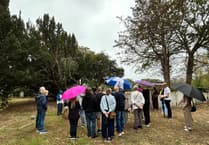

To find out more about how you can make you own mark for nature, visit surreywildlifetrust.org/runwild
Running dry
A pond on Wisley Common near Woking dropped to its lowest level in nearly two decades during the summer heatwaves, according to wildlife expert James Herd, director of reserves management at Surrey Wildlife Trust.
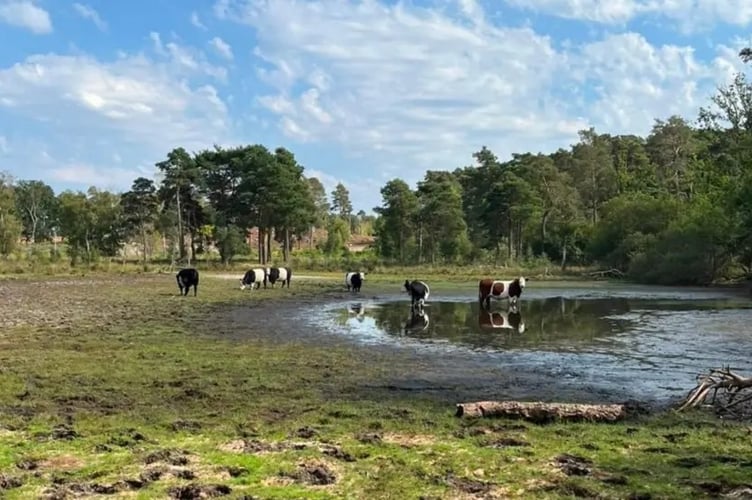
James appeared on several BBC programmes saying he has never witnessed the pond so depleted in the 17 years he has monitored it. He said it raises concerns about the impact of shifting weather patterns on local ecosystems.
The pond is at Pond Farm on Wisley Common. This is an area of lowland heathland, a rare habitat found on acidic and nutrient-poor soils.
Wisley Common is adjacent to RHS Garden Wisley where an official Met Office meteorological station recorded no rainfall for over 50 days during the summer.
James said the historic low pond level shows the need to prepare for long periods of dry weather, because this summer is "not a one-off".
He stressed: “Ponds and other small wetland habitats are particularly vulnerable to prolonged dry spells. They rely on regular rainfall and groundwater levels to sustain the plants and animals that depend on them. The knock-on effects affect everything through the food chain, from amphibians and insects to the birds and mammals that feed on them.”
James is urging individuals and communities to start preparing for more frequent extreme weather events. He said there are several ways we can help to help mitigate damage caused by future droughts including water-saving initiatives, designing landscapes that can withstand both dry spells and flooding, and educating local residents on climate resilience.
James said the water-depleted pond on Wisley Common serves as a stark, visible reminder of how climate variability is already reshaping familiar landscapes close to home.
He emphasised: “Even small, local habitats like ponds can act as important indicators of broader environmental change, making their preservation and monitoring increasingly vital in the years ahead.”
Comments
This article has no comments yet. Be the first to leave a comment.