
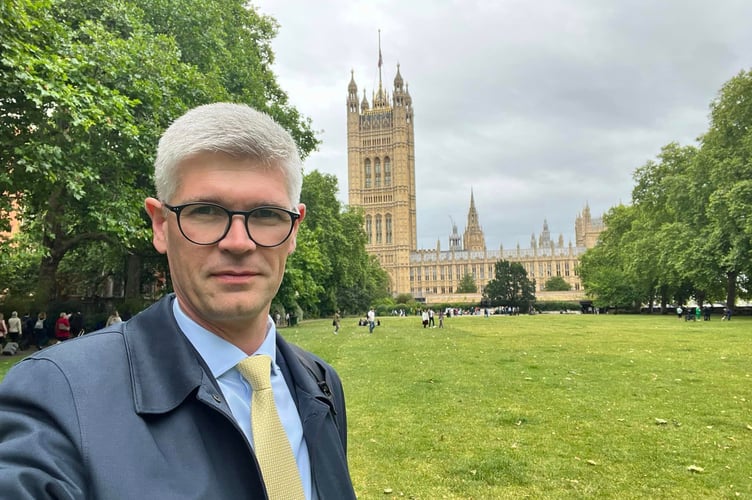
The week marked a poignant moment in our national conscience. Brendan Cox - husband of the late Jo Cox MP - released a deeply moving co-authored report under the name Survivors Against Terror.
Timed to coincide with the UK’s first dedicated National Memorial Day for Victims and Survivors of Terrorism, the report served as a powerful reminder of the human cost of political violence.
Reflecting on his words, I feel compelled to share a personal insight into what security looks like today for Members of Parliament and our families.
There is no escaping the fact that MPs operate constantly in the public eye. As a local MP who lives directly within the community I represent, my public life and private life naturally overlap. I am regularly approached when doing the weekly shop at the supermarket or walking through town with my family.
Ninety-nine per cent of the time, these are warm, constructive interactions. It is a genuine privilege to connect with neighbours, listen to local concerns, and build relationships with the people who put their trust in me.
At the end of the day, that is why I signed up for the job - I am a local man who wants our community to thrive. Accessible representation is, after all, the bedrock of British democracy.
Yet beneath that vital accessibility lies a quiet, lingering anxiety. For Jo Cox in 2016 and Sir David Amess in 2021, standard constituency work - the everyday interactions and open-door surgeries that form the heart of our democracy - ended fatally.
Those tragedies changed the landscape of public service forever. They make the everyday workings of this job inherently daunting.
Every single week, my team and I process hundreds of threats. They arrive via social media comments, private messages, and direct emails.
While it is easy for onlookers to dismiss these as "just words on a screen", the reality is that for two MPs, those words escalated into devastating violence. When you sit down at a surgery or walk into a community hall, you cannot help but hold that knowledge in the back of your mind.

.jpeg?width=209&height=140&crop=209:145,smart&quality=75)
The challenge we face is striking a delicate balance. If we hide behind screens, locked gates, and heavy security details, we destroy the uniquely accessible nature of the British parliamentary system.
Constituents deserve to sit down face-to-face with their representative to talk about their housing issues, healthcare concerns, or local roads.
But equally, no public servant should be left wondering if a routine surgery will be their last.
Protecting MPs is not about bestowing special privileges on politicians; it is about defending the open, democratic debate that terrorists and extremists seek to destroy.
As we honour the memory of Jo, Sir David, and all victims of terrorism, we must commit to fostering a public culture rooted in disagreement without hatred, and debate without danger.
Democracy can only thrive when those who serve it are safe to do so.
Comments
We've recently changed our login process. If you have an account for commenting, you will need to re-register on the login window.
This article has no comments yet. Be the first to leave a comment.