
.jpeg?trim=0,0,3,0&width=752&height=1335&crop=752:1335)
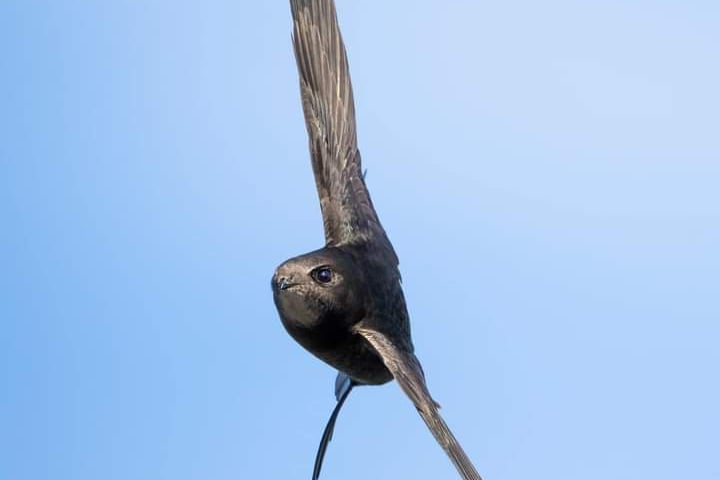
The common swift is an iconic summer sight in our skies, with its streamlined sickle-like shape and amazing aerial acrobatics.
This remarkable bird sleeps, eats, bathes and mates on the wing, as well as migrating over 6,000 miles twice every year from sub-Saharan Africa to Northern Europe to raise its young.
However, this incredible species needs our help: it is now listed on the Red List of Birds of Conservation Concern, with a 60 per cent reduction in numbers from 1995 and 2020, according to the RSPB, mainly due to the loss of its traditional nesting sites in the eaves of buildings: older buildings where swifts once nested are being demolished and modified, and the design of new buildings is such that they lack the nooks and crannies where swifts can nest.
This alarmed nature lover Sarah Davis from Guildford so much that in 2019 she set up the Guildford Swift Project, to raise awareness of the swift’s problems.
She explained: “Swifts return to the same nest-site each year, often using nooks and crannies in older buildings to nest. If buildings are renovated or demolished, swifts have nowhere to raise their young. This comes on top of other challenges such as climate change and a reduction in numbers of the insects they feed on.”
The Guildford Swift Project is a community-focused conservation initiative dedicated to supporting swifts nesting in and around Guildford. It is led by Sarah with support from volunteers and works alongside Zero Carbon Guildford.
“There’s lots we can do to help swifts, including raising awareness, mapping their nests, providing artificial nest boxes for mounting on existing buildings and encouraging builders to include artificial nesting cavities – “swift bricks” – in building renovations and new-builds.


“In Surrey we are lucky to have several community swift groups and projects, working tirelessly to conserve this wonderful bird. I felt swifts would benefit if the groups connected up: to share ideas, to learn from and help each other, and focus on what more can be done to bridge the gaps.
“It would also be a central point where the general public could approach us and find out information.”
Sarah approached Surrey Wildlife Trust with her idea and they took it up under their Wilder Communities Team, which has developed it into an organisation called The Surrey Swift Collective.
“It's become a game changer,” commented Sarah. “The groups have common problems and we are starting to solve those within the collective. For example, we have a shortage of swift box makers and box fitters, so are hoping to start building a directory of skilled volunteers.”
Sarah also pointed to the challenges of rehabilitating injured or grounded swifts: “There are only two swift ‘rehabbers’ in the whole of Surrey. One of those rehabbers recently joined the Surrey Swift Collective to help us explore how we can train up new people.
“Wildlife crime is another problem area and we will be seeing how we can collectively improve communications with other agents involved in tackling that problem.
“For example, despite it being an offence to harm or destroy nests of wild birds during their nesting season, there are instances of wilful demolition of buildings in which swifts were nesting.”
The Surrey Swift Collective holds an annual swift awareness week: this year’s was very successful, with a variety of events such as walks and talks.
To connect with the Guildford Swift Project visit its Facebook group (facebook.com/guildfordswiftproject) or email [email protected]
For information on the Surrey Swift Collective visit https://tinyurl.com/surreyswift
Comments
We've recently changed our login process. If you have an account for commenting, you will need to re-register on the login window.
This article has no comments yet. Be the first to leave a comment.