
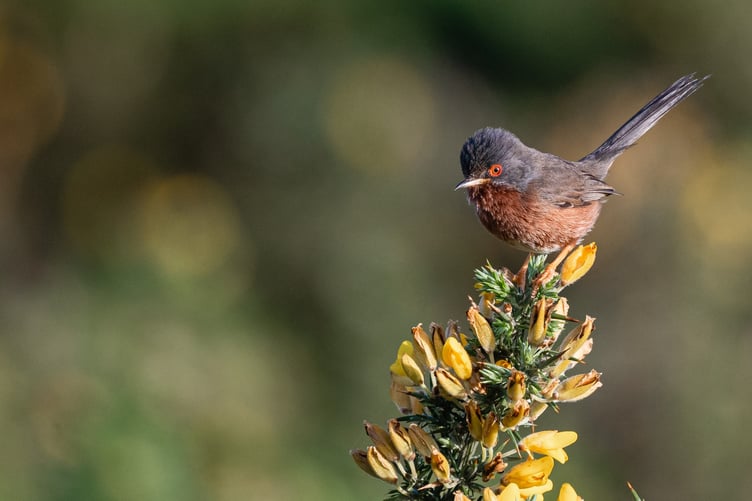
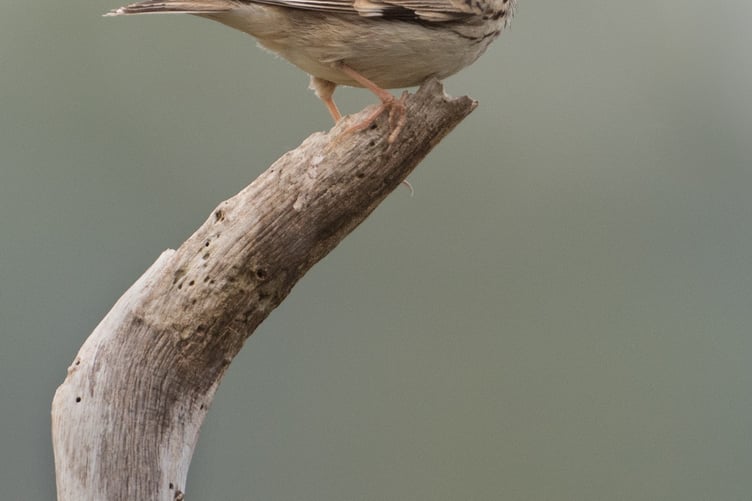
I hear many doom and gloom messages for creatures and plants from nature charities, so it was great to hear a positive story about three bird species that inhabit only very specific habitats found on local heathlands: the nightjar, woodlark and Dartford warbler.
The heathlands in our area are globally rare examples of lowland heath, one of the most ancient and characteristic British landscapes.
They include Chobham Common – the largest nature reserve in south-east England and a biological Site of Special Scientific Interest (SSSI) – plus Thursley Common, Ash Ranges and Pirbright Common.
The nightjar, woodlark and Dartford warbler were the primary targets of a heathland bird survey, undertaken last summer by the British Trust for Ornithology (BTO) and the RSPB, and funded by Natural England and Defra. The last national survey of these species took place almost 20 years ago, so scientists were keen to discover how these birds are faring, changes in their populations and whether the places where they live are in good enough shape to support sustainable populations.
More than 1,200 volunteer birdwatchers across the UK took part.
The good news is that all three species have experienced notable increases in population since the last survey. In the case of woodlark and nightjar there has been significant range expansion and recolonisation, with the latter species now breeding in Scotland in increasing numbers.
BTO data shows that woodlark and nightjar saw increases of 29 per cent and 20 per cent in territories counted respectively, while the RSPB reported that Dartford warbler has increased by around 27 per cent in the UK.



The ranges of all three species are predicted to continue shifting northwards due to climate change. In the UK, at the northern edge of their ranges, Dartford warblers and woodlarks have both recently benefited from milder winters.
However, more than 60 per cent of the Dartford warbler’s current range is projected to become unsuitable by the late 21st century, particularly in Spain and Portugal, where most of the global population occurs. Overall, the species has declined by more than 50 per cent across Europe since the late 1990s.
Fewer sites were covered in 2025 than during previous national surveys, yet researchers found substantial population increases, indicating that the actual growth in numbers and distribution is likely to be even higher than reported.
All these birds are reliant on particular habitats and conditions, and the results of the survey demonstrate just how critical well-managed heathland and forest environments are to the long-term future of these three species, and to other scarce plants and animals that inhabit these important landscapes.
I asked Surrey Wildlife Trust – which manages Chobham Common and other heathland sites in our area – if the national figures were replicated locally.
Adam Bolton, nature recovery manager at Surrey Wildlife Trust, said: “We have no specific data, but I can confirm that populations are looking pretty healthy across the reserves we manage.
“Heathland birds including nightjar, woodlark and Dartford warblers benefit from careful management of these precious habitats in order to nest successfully.
“It's great that the efforts of conservationists and volunteers in Surrey and nationwide are helping these species increase their populations. However, there's no room for complacency and we need to be vigilant against the risk of fires as the summer progresses.
“I'd ask everyone who visits heathland sites to take extra care not to drop litter, and to avoid smoking or holding barbecues on our heathlands."
Comments
We've recently changed our login process. If you have an account for commenting, you will need to re-register on the login window.
This article has no comments yet. Be the first to leave a comment.