
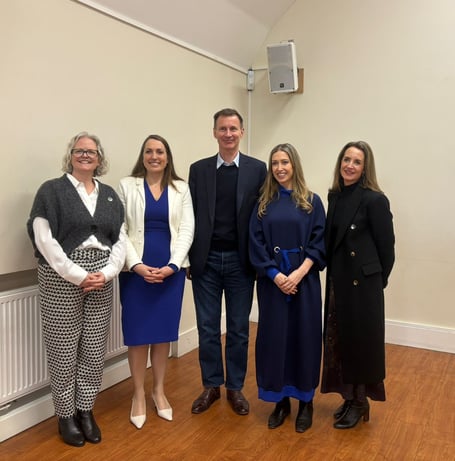
Parents are facing “no bigger issue” than the impact of smartphones and social media on their children, says Godalming and Ash MP Jeremy Hunt.
The former chancellor told a public meeting in Godalming that his own family are now also “in the thick of it”, debating whether to allow their kids to have smartphones and social media.
Doctors, teachers, parents and politicians gathered at Wilfred Noyce Community Centre in Godalming on March 13 to discuss concerns around children using smartphones and social media, and whether there should be a ban for under-16s.
The discussion forms part of ongoing work with the campaign group Smartphone Free Childhood Surrey, which have been working with Mr Hunt and other local campaigners to raise awareness on the impact smartphones might be having on young people’s learning and wellbeing.




Concern is growing among parents, carers and educators that smartphones are disrupting classrooms, compromising safety and chipping away at children’s mental health. Evidence shared at the meeting suggested only around 11 per cent of schools are currently smartphone-free, despite research indicating pupils in such schools can achieve GCSE results one to two grades higher.
Audience members also heard stark anecdotal evidence from a frontline healthcare professional in a statement she sent to be read at the meeting. Consultant paediatrician Dr Louise Mills described several cases she had treated linked to online trends and cyberbullying. They included a 14-year-old admitted after suffering a seizure while attempting a TikTok challenge, and an 11-year-old who suffered life-changing burns after copying something seen online. Another 14-year-old patient took their own life following sustained cyberbullying.
GP Susie Davies, founder of the charity PAPAYA (Parents Against Phone Addiction in Young Adults), said young people were experiencing a “mental health epidemic”.
She said teenagers now spend on average two to three hours a day on social media (some spend more than five) exposing them to constant comparison and harmful content.
“The tech is addictive by design,” she said. “It is structured with dopamine reward pathways which the teenage brain is particularly vulnerable to.”
Ms Davies told the community centre that problematic phone use makes young people more likely to experience depression. She added that children are missing out on sleep, real-world experiences and face-to-face friendships, with some even suffering trauma after viewing disturbing content online.
Shadow education secretary Laura Trott MP told the audience smartphones and social media were “not safe for our young people”. She argued schools should remove smartphones from classrooms and ensure technology is only used when it has proven educational value.
The MP for Sevenoaks, Swanley and the Dartford Villages said: “We’ve sleepwalked into the overuse of screens in schools to the detriment of education.”
Leader of Waverley Conservatives Councillor Jane Austin said: “As a mum of four, I’ve seen directly the impact smartphones and social media can have on children. A number of Surrey schools have already adopted no-smartphone policies, and the evidence is clear that this helps children focus and achieve better outcomes.
“If elected to run West and East Surrey, Conservatives will work to ensure all Surrey schools are smartphone-free so that children can learn without constant digital distraction.”
Some Year 11s in the audience raised the issue that some children might get VPNs to work round the social media ban, or might find other ways to source smartphones. “We have bans on alcohol and cigarettes for children,” she said. “They’re not 100 per cent perfect but they exist because those things are harmful. The same is true for social media.”
Campaigners from the group Smartphone Free Childhood also called for cultural change, arguing that delaying children’s first smartphone until at least 16 could dramatically improve attention spans, wellbeing and learning.
Headteacher Adam Samson said his school, Godalming Junior, already requires pupils to hand in phones at the start of the day, with Year 6 pupils sometimes allowed a simple “brick phone”. The policy has reduced cyberbullying incidents to zero, he said.
“Once children have a smartphone, they always have one,” he said. “We’re simply delaying it and giving them more time to be children.”
Comments
This article has no comments yet. Be the first to leave a comment.