
Most people have a rough sense of how government works. The Prime Minister leads the country, supported by Secretaries of State who run the major departments of state. Together they form the Cabinet, the group responsible for setting the government’s priorities and delivering policy.
Each Secretary of State has their own patch. Education, justice, defence, the Home Office and so on. Their job is to run those departments while the Prime Minister keeps an eye on the wider direction of the country.
In Parliament, the second largest party forms His Majesty’s Official Opposition. Their role is simple but vital. They hold the government to account.
To do that effectively they appoint a “shadow cabinet” which mirrors the real Cabinet. Each shadow minister follows the work of their opposite number and challenges them in Parliament. At the moment that opposition is led by the Conservative leader, Kemi Badenoch.

But politics at Westminster is not simply a two-party affair. That raises an obvious question. What role do the other parties play in holding the government to account?
The answer is that we do play a role, although the structure works slightly differently.
Parties like the Liberal Democrats appoint spokespeople to cover major policy areas. These roles are allocated by our leader, Ed Davey. The purpose is straightforward. Scrutinise the government and speak for the party on that issue.
It also means we get opportunities to question ministers directly. When a Secretary of State appears in the Commons to answer questions, the Conservative shadow minister will usually be called first.
After that, the Liberal Democrat spokesperson will normally be invited to put their questions as well.
MPs from smaller parties can still take part in debates, but they do not usually have guaranteed speaking slots because they do not have designated spokespersons.
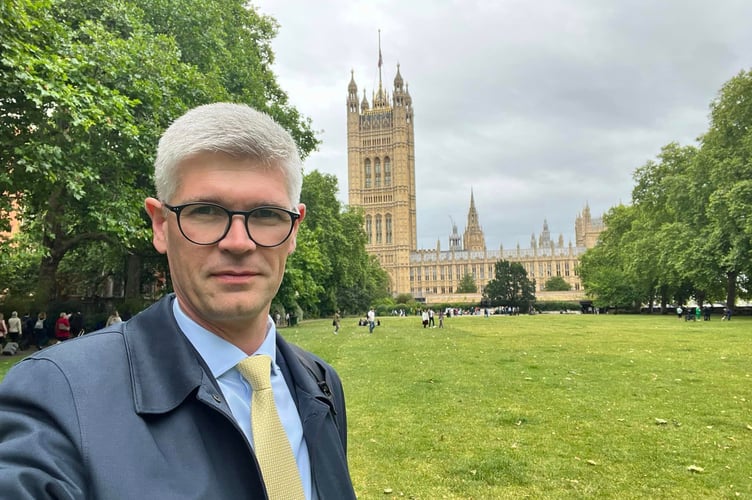
My own role at the moment is the Liberal Democrats’ Europe Spokesperson. That places me within the wider foreign affairs team led by my colleague Calum Miller, with responsibility for scrutinising the government’s relationship with Europe.
Some people assume the role mainly involves standing up in the Commons chamber and asking a pointed question of a minister. That certainly happens. But in reality much of the work takes place away from the television cameras.
Spokespeople help shape the party’s policy thinking, brief colleagues ahead of debates, and work closely with researchers and advisers to test the government’s arguments and proposals.
At the moment, for example, I am working closely with our Treasury team to explore what the UK economy could look like if Britain moved towards a UK EU customs union and, in time, rejoined the single market.
That means speaking with economists, businesses, and policy experts, and examining the evidence around trade, investment, and growth.
The day-to-day work is a mixture of written parliamentary questions, meetings with policy advisers, think tanks, academics, and coordination with Liberal Democrat colleagues in both the House of Commons and Lords. It is less theatrical than Prime Minister’s Questions, but it is where a great deal of the serious scrutiny happens.
These spokesperson roles can change if party leaders reshuffle their teams, although that happens far less frequently than government reshuffles.
Before taking on the Europe brief, I served as the Liberal Democrats’ Northern Ireland spokesperson. It was a fascinating but highly technical brief, and I learned a great deal very quickly.
Parliament works best when scrutiny comes from more than just two voices across the despatch box. Third party spokespeople provide another perspective, another set of questions, and another layer of accountability.
And in a healthy democracy, governments should always expect to be asked a few difficult questions.
Comments
This article has no comments yet. Be the first to leave a comment.