
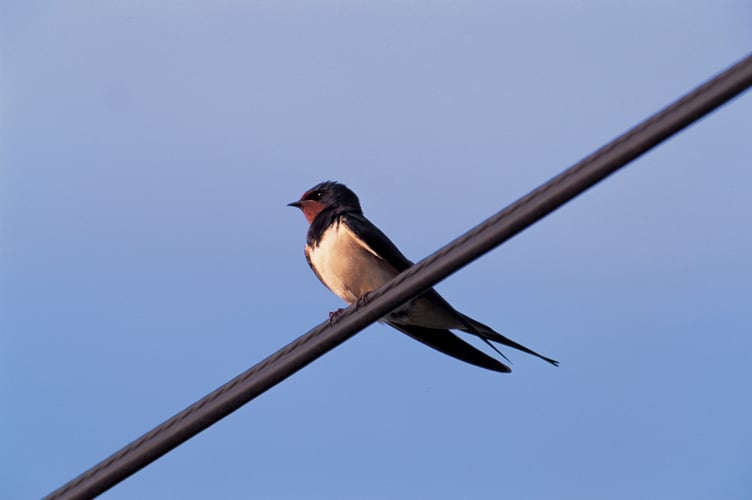
Is it a Swift, Swallow, House Martin or Sand Martin?
These birds are familiar sights of summer, darting and diving in flight. They are beautiful long-haul migrants, migrating from Africa to the UK to raise families before returning in the autumn.
From late spring to early autumn they soar through our skies, performing incredible feats of aerial acrobatics to catch insects on the wing.
But can you tell them apart? If not, two excellent web pages will help. You can find them easily by typing swift, swallow or martin” into the search boxes on www.rspb.org.uk or www.wildlifetrusts.org
.jpg?width=209&height=140&crop=209:145,smart&quality=75)


Both will help you tell swifts, swallows, house martins and sand martins apart and are packed with facts about each: where they like to nest, what their nests are like, and how to help them, because numbers of each are in decline mainly due to climate change and human interference.
Even better, The Wildlife Trusts and the RHS jointly offer an excellent free leaflet titled “Wild about high fliers” containing details of the four species and their differences. You can download it here: https://tinyurl.com/swiftswallowmartin.
The publication also includes a map showing their migration routes, the threats they face, and how we can help them, from what we offer in our gardens to building a swift box.
Swifts, Swallows, House Martins and Sand martins can be identified by their colourings up close. If you’re not lucky enough to have any nesting where you live, you’ll likely see them only as silhouettes against the sky. The Wild about high fliers guide helps differentiate them from the distinctive shapes of their wings and tails.
Swifts are true to their name, reaching speeds up to 70mph. They look rather like a boomerang when in the air. They are very sociable and can often be spotted in groups darting over roofs and calling to each other with high-pitched screams.
-Jon-Hawkins-Surrey-Hills-Photography.jpg?width=752&height=500&crop=752:500)
Amazingly, Swifts only touch ground to rest. They are black all over, with a small, pale patch on the throat. They tend to nest in roofs of old buildings and churches.
Swallows are often found close to water and can be seen in meadows and farmland. They build their nests from mud.
Although they usually avoid towns, Swallows sometimes use man-made structures such as barns or garages to nest. They have a very long, forked tail and are glossy dark blue above, white below (but with a black band), with a dark red forehead and throat.
House Martins also build mud nests which they like to construct below the eaves of buildings, in built-up areas and the countryside. They are glossy black above, completely white below, and have a white rump and a short, forked tail.
Sand Martins nest in holes which they burrow into a vertical bank of sand or dry earth, such as a sea cliff, railway cutting or quarry pit. They are brown above and white below, with a brown band across their breast and a short, forked tail.
The numbers of all four birds are declining. The Wild about high fliers guide explains the things we can do at home to support them.
You might want to encourage the insects they eat, offer materials to help them nest, or build a swift box to act as their summer residence.
Comments
We've recently changed our login process. If you have an account for commenting, you will need to re-register on the login window.
This article has no comments yet. Be the first to leave a comment.