
The rings attached to wild birds’ legs have been revealing important insights into how long birds live, how far they move, and reasons for population and distribution changes.




We recently explained bird ringing in “Out and About”: it’s a reliable and harmless way to identify individual wild birds, whereby a lightweight, uniquely numbered metal ring is fixed around a bird’s leg.
Ornithologists – scientists who study birds, rather than leisure bird watchers – have been catching and ringing wild birds in Britain and Ireland for over a century. Bird ringing in the UK and Ireland is managed by the British Trust for Ornithology (BTO).
Only specially trained ornithologists, licensed by the BTO, are allowed to fit rings to wild birds in the UK and Ireland. Many are volunteers, often working for or on behalf of wildlife charities and nature conservation organisations.
Last month the BTO released its annual report resulting from wild bird ringing activities. It covers the year 2024, when licensed bird ringers caught and ringed a total of 865,934 wild birds.
Each bird’s ring has a unique number inscribed. If the bird is re-caught or sighted alive, or discovered dead, researchers look it up in a database. This helps show the species’ average lifespan and whether it is increasing or decreasing over time.
The rings reveal much more, as Dr Ellie Leech, head of the British and Irish Ringing Scheme, explained: “We get information on how far birds move, be it just down the road for a typical house sparrow, or all the way down to Africa for swallows and nightingales.
“The number of young birds caught each summer also documents how successfully species are breeding, and whether this has changed over time. None of this would be possible without the dedication of our 3,000 licensed bird ringers, for which we are hugely grateful.”
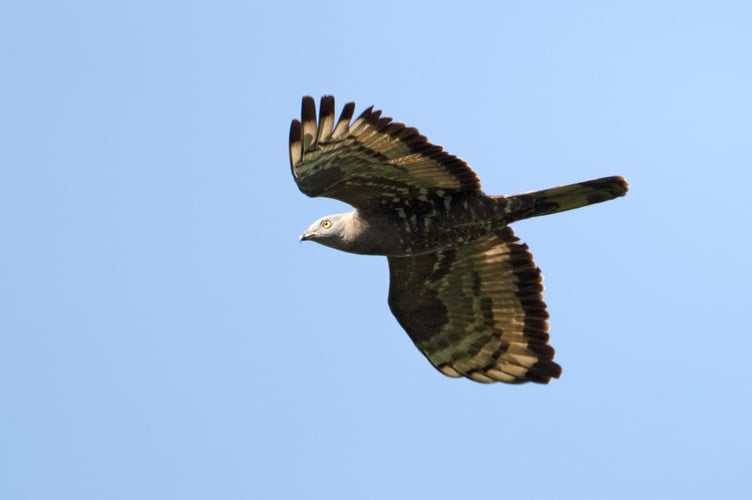
Longevity records set in 2024 include Britain’s oldest known honey-buzzard, ringed in August 2006 and still going strong in 2024. The secretive bird of prey, which migrates from tropical Africa to breed in Europe, was seen just 38km away from where it was originally ringed as a nestling almost two decades earlier.
Other notable longevity records include a great black-backed gull which had lived for 30 years and four days –not bad considering their average lifespan is 14 years! And a woodpigeon (average lifespan three years) was found to have lived for 19 years and 8 months.
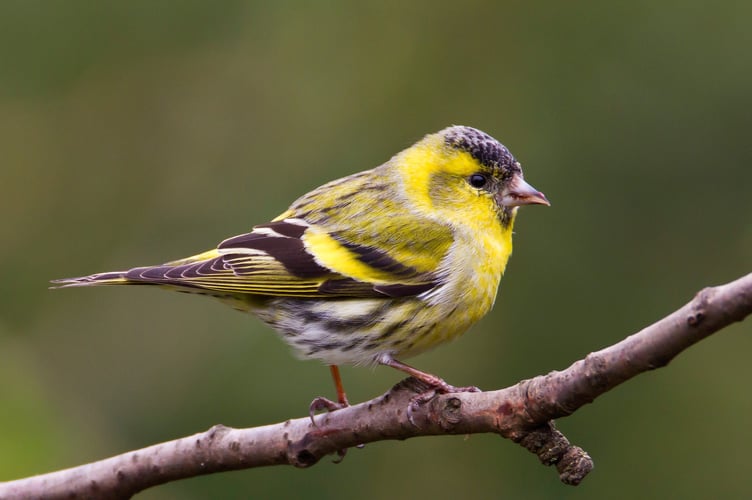
The report showed 2024 was a bumper year for siskins. These small finches breed in the UK but their numbers increase every winter to varying degrees as Continental migrants cross the North Sea to spend the relatively milder winter months here.
And 2024 was an “influx year”: bird ringers caught and ringed 63,815 siskins across the UK – the highest number recorded.
Among birds caught in the UK were siskins previously ringed as far away as Murmansk (Russia) and the Czech Republic.
The top five species ringed in 2024 were blue tit (104,603), siskin (63,815), chiffchaff (55,374), blackcap (52,320) and great tit (50,881).
Dr Rob Robinson, the report’s lead author, commented: “The data that volunteer bird ringers provide have never been more important. In addition to the direct impacts of habitat loss and climatic change, birds are facing emerging diseases.
“Without the detailed information gained by catching and ringing birds, we would have far less understanding of what the future might hold and how we can help our wildlife.”
Comments
We've recently changed our login process. If you have an account for commenting, you will need to re-register on the login window.
This article has no comments yet. Be the first to leave a comment.