
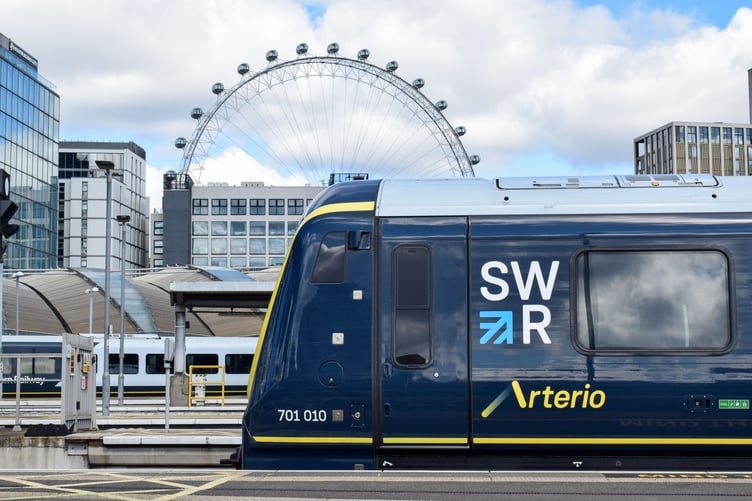
Rail operators in the South East have launched a crackdown on passengers deliberately buying tickets for only part of their journey to avoid paying the full fare.
South Western Railway (SWR) and Network Rail Wessex say they have identified widespread misuse of barcode tickets and e-tickets through a practice known as "short-faring", where customers buy a cheaper ticket covering only part of their journey.
The data-led campaign forms part of SWR's wider revenue protection strategy, which the company says has helped cut fare evasion by 67 per cent since 2017, with a further 11 per cent reduction over the past year.
Using operational, retail and customer data, SWR says it has identified fare evasion patterns, launched targeted enforcement activity and responded to emerging hotspots across its network.
Around 172 million journeys are made on the SWR and Network Rail Wessex network each year. While most passengers pay the correct fare, the operator estimates that around 6.5 million journeys are made without a valid ticket, costing almost £40 million annually.
According to the Rail Delivery Group, fare evasion costs the rail industry almost £400 million a year.
The programme follows revenue protection teams as they tackle fare evasion and other forms of ticket fraud.
SWR estimates that up to 95 per cent of barcode tickets bought between Vauxhall and London Waterloo are being used fraudulently, putting up to £1 million of revenue at risk.
In response, the company launched a targeted trial at London Waterloo in June 2026, where persistent misuse had been identified.
Since the trial began, revenue protection teams have identified 153 short-faring offences, compared with just seven during the same period last year.
-Ali-G-Indahouse-(Universal-Pictures).jpeg?width=209&height=140&crop=209:145,smart&quality=75)



The operator said early data suggests around one-third of passengers previously identified as short-faring on the route are now buying the correct ticket. During the first four weeks, the trial protected an estimated £45,000 in revenue.
SWR also said some fare evaders had attempted to switch to buying barcode tickets from other London stations. At one location, barcode ticket sales increased by 89 per cent compared with the same period last year, which the operator said demonstrated how data was helping identify changing patterns of fare evasion.
Recent cases highlighted by SWR include a passenger who owed more than £11,000 after repeatedly travelling from Hampshire to London without buying the correct ticket over four years, and another who evaded £20,000 over three years while travelling between Surrey and London and also fraudulently used a 16-17 Railcard.
Matthew Winnie, South Western Railway and Network Rail Wessex chief customer and commercial officer, said: "The overwhelming majority of our customers pay the correct fare. However, there's growing evidence of some people deliberately exploiting the system - a criminal offence that deprives the railway of hundreds of millions of pounds each year.
"We know our customers don't like seeing blatant fare evasion, whether that's tailgating through ticket gates or simply travelling without a ticket. But we're also tackling the less visible forms of fare fraud, including short-faring and misuse of e-tickets.
"Every fare avoided is money that can't be reinvested into improving the railway and delivering the best possible service. We have a responsibility to protect revenue and our specially trained teams work around the clock to check tickets on stations and trains to improve fairness for the millions of customers who do the right thing."
The figures have been released as SWR's revenue protection team features in the new Channel 5 documentary series Fare Dodgers: At War with the Law, which premieres tonight (Monday, August 3) at 9pm.
Comments
This article has no comments yet. Be the first to leave a comment.