
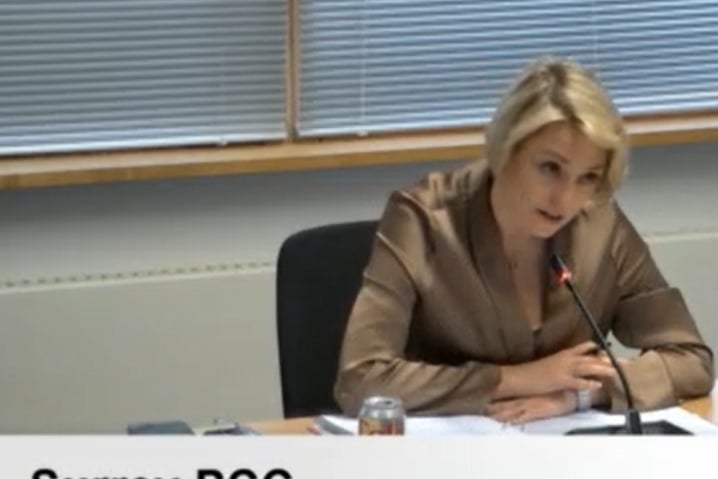
The average household in Surrey could pay more than £350 a year towards policing after a £15 council tax hike was given the go-ahead.
The police precept, the portion of council tax that funds Surrey Police, will rise from £338 to £352 a year for the average Band D home from April 2026. This is a 4.4 per cent increase from last year.
The rise was backed by the Surrey Police and Crime Panel on February 4, despite a sharp debate over whether residents can afford it.
Police and Crime Commissioner (PCC) Lisa Townsend said the increase was needed to prevent services from deteriorating. She warned that without the full rise, people could face slower answers to 999 calls, longer waits for officers to attend incidents, and delays in forensic investigations.


.jpeg?width=209&height=140&crop=209:145,smart&quality=75)
“For every £1 on the precept, about £0.5 million goes into the Force,” she told the panel. “That equates to around 15 police staff or officers.”
Ms Townsend said Surrey Police has become “one of the most improved forces in the country” in recent years, with more visible neighbourhood policing and better performance on crimes such as burglary and vehicle theft.
But she said rising demand and increasing costs mean those improvements are at risk.
Ms Townsend said: “Improvements we are seeing today have only been possible because of previous decisions to increase the policing precept. Those decisions have allowed SP to invest in officers, staff, systems and technology that are now delivering results on the ground.”
According to the PCC, on an average day, the force handles almost 1,700 contacts from the public, sent vehicles to almost 250 incidents.
Each day 216 crimes are recorded, 33 relate to violence against women and girls, 56 are assault, armed response officers are called out 16 times a week.
She said: “The improvements achieved so far simply cannot be sustained” without further funding.
But some councillors challenged the move. Cllr Richard Wilson said many residents in his area are struggling to afford food, heating and rent.
He questioned whether it was the right time to increase bills and asked if Surrey, as a relatively low-crime county, could manage with a smaller force.
Kelvin Menon, chief finance officer for the PCC’s office, said Surrey receives one of the lowest levels of government grant in England, making it more reliant on council tax. He said cutting funding would mean difficult choices about which services to scale back.
Mr Menon argued that although Surrey may be a ‘low-crime’ area, it is the police keeping it that way: “What level of crime are people willing to accept?” He added: “The level of poverty in the country is possibly not the fault of the police precept.”
The PCC repeatedly assured the panel that Surrey Police has already delivered about £90m in savings over the past decade. Even with the tax rise, the force still needs to find £5.5m in further savings this year and more in the years ahead.
An overspend of around £1m this year has been driven largely by overtime costs.
A public consultation found 57 per cent of respondents supported a £14 increase, the maximum allowed at the time. More than 2,400 people took part; however, this was highlighted as a small proportion of Surrey’s 1.3m residents.
Comments
This article has no comments yet. Be the first to leave a comment.