
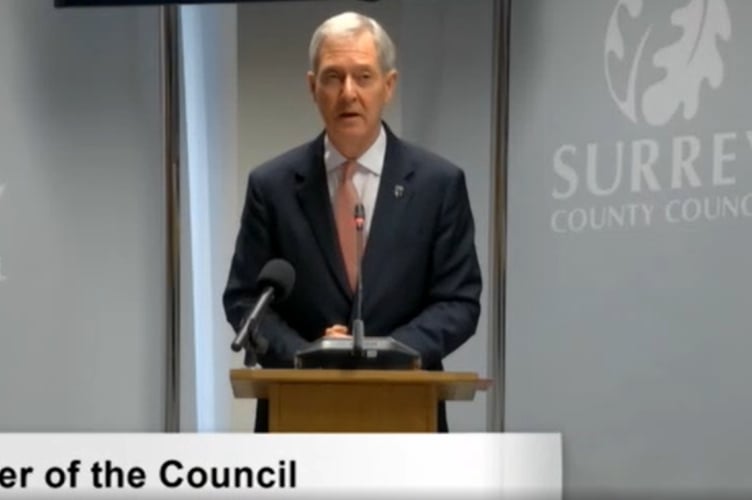
Council tax bills in Surrey will rise by almost five percent after county councillors approved its final budget.
Members of Surrey County Council green-lit its last ever budget at a full council meeting on February 3. This is the county’s final before it is dissolved into two unitary authorities under local government reorganisation.
Councillors have approved a 2.99 percent council tax rise plus a 2 percent adult social care levy from April 2026, the maximum allowed. For a typical Band D household, that means paying £7.67 more per month.
Why is council tax going up?




The rise comes after the Government announced a new three-year funding deal for councils from 2026 to 2029. While ministers say councils will see more ‘spending power’, much of that increase depends on councils raising tax locally. So, no extra money will come from Westminster.
Surrey’s bosses say changes under the Government’s ‘fair funding’ reforms mean the county will lose significant national funding in the coming years.
Council leader Cllr Tim Oliver said residents were being asked to pay more just to maintain services. “We cannot accept a model where residents will pay more each year to, at best, stand still. That is a government, political decision and one which this council has no control over,” he said.
He added that the council would continue lobbying ministers for a better deal. “Long-term sustainability requires a fairer national settlement. This is a clear message to the government: we will do our part, now fund us fairly.”
The council’s finance chief warned Surrey is set to lose more than £180m in government funding over the next three years. He said: “Even with maximum council tax rises, we’re still facing a funding gap of over £100m by 2028/29.”
What is the money being spent on?
Despite the challenging situation, Surrey bosses said they have tried to protect frontline, people-facing services, despite the financial squeeze.
They highlighted:
- Adult social care changes focused on helping people stay independent, receiving safe and compassionate care
- Improvements to support for children with special educational needs and disabilities (SEND), including more local provision and transport
- Core services such as road maintenance, potholes and libraries
- Spending on adult social care will increase by more than 5 per cent, with a focus on helping people stay independent for longer.
There is also continued investment in children’s services and special educational needs and disabilities (SEND), including funding for more local specialist school places and children’s homes. Capital spending of £297 million is planned next year, covering areas such as highways maintenance, school places, SEND provision and adult social care accommodation.
Cllr Oliver said: “We know households remain under real pressure from the cost of living. We do not take decisions lightly on council tax.”
He added there is a wide range of support available to residents struggling.
Political opposition voices concerns
Opposition councillors pushed back on the leader’s claims the budget ensures ‘no one is left behind’. They said the budget does not go far enough to fix deep-rooted problems, especially in children’s services.
Leader of the Labour group, Cllr Robert Evans, described the budget as a “one-year sticking plaster”, pointing in particular to the growing crisis in SEND provision. “This isn’t just an accounting problem, children are missing important years of education.”
Cllr Catherine Powell, Residents’ Association and Independent Group leader, said social care remains the biggest pressure on the council’s finances and called for more support for foster carers, despite plans for more children’s homes.
Leader of the Green Party Group, Cllr Jonathan Essex, said the capital programme to build more special needs school places was still “playing catch-up”, adding: “Inaction is costing us £20 million a year.” Meanwhile, Cllr Liz Townsend (Liberal Democrat) said some promised investments amounted to “false hope”.
The report warns of major financial risks beyond next year. Demand for social care continues to rise sharply, while inflation and interest rate pressures remain uncertain.
One of the biggest long-term concerns is the soaring deficit linked to SEND provision. Surrey’s high needs education deficit is forecast to reach around £309 million by March 2027. While this is currently kept off the council’s main balance sheet by a temporary government accounting rule (safety valve agreement with the high needs block), finance officers describe it as a serious national issue that threatens many councils’ financial stability.
Comments
This article has no comments yet. Be the first to leave a comment.