
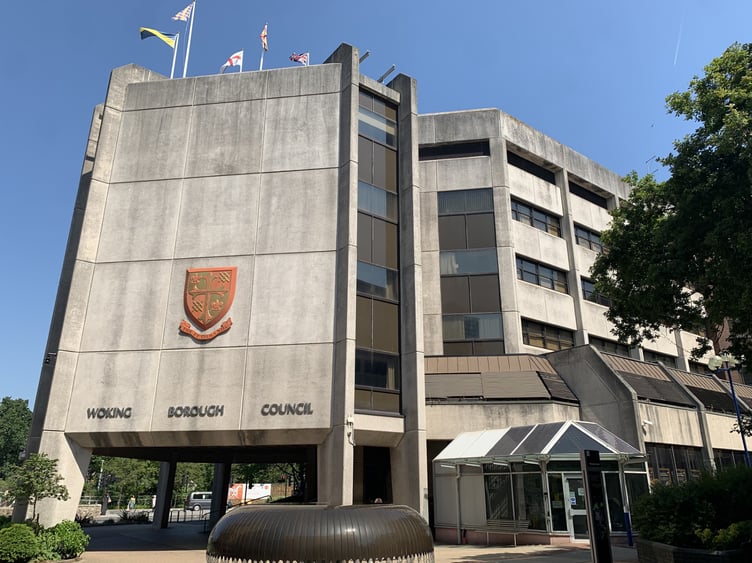
Woking Borough Council is locked into a fossil-fuel energy contract with its own company that it can not get out of – and now it’s hiking up prices by more than £325,000 with no viable alternative but to pay up.
The council founded Thameswey Energy in 1999 to provide heating and cooling, with many of its buildings physically connected to the plant and unable to draw energy from elsewhere.
It has meant the council cannot change suppliers, as the cost of connecting its buildings to the wider grid is prohibitively expensive, the papers said.
Now, the company has reviewed its commercial tariffs as part of its move to clear up its books, while Woking Borough Council works its way through the financial labyrinth that led it to its £2 billion bankruptcy.
But it lumps the council with an additional £326,000 utility bill.
Councillor Louise Morales (portfolio holder for development management) told the October executive committee: “I continually find that the lack of forethought from those who put no other alternatives in when they built these networks is astounding, but we are where we are, so we have to go with this, and it isn’t economical to change it in the very near future.
“Maybe at some point in the future it might be worth investigating a different alternative, especially as the Thameswey system still uses gas and we’re supposed to be moving away from gas and going towards something that is a bit more environmentally sustainable. But at the moment this is the best we can do.”
Thameswey supplies heat, cooling, and private wire electricity to a number of council-owned buildings connected to its district energy network, including civic offices. The arrangements were developed over the years, with some deals having expired and others not formally renewed.
“In short, they were a bit of a mess,” Cllr Dale Roberts, the portfolio holder for finance, said.
“This…is to place the council’s energy supply in a clear, consistent, and properly documented contractual basis. Thameswey has also reviewed its commercial tariffs because the historic tariffs have not been updated for a significant period and no longer reflect current market benchmarks, operating costs, or regulatory requirements.




“It is important that commercial arrangements between the council and companies that the council owns are transparent and that they are conducted on an arm’s-length basis. The council should neither receive preferential terms because it owns the supplier, nor pay charges that cannot be just against the market.”
“The revised tariffs have been independently reviewed and assessed against benchmark prices, and that gives us additional assurances.” The new tariffs will increase the council’s energy costs by about £326,000 and be billed back from April 2026.
The council has prepared for the expected rise, and the funds have been included in this year’s budget. Alternative suppliers were considered, but the impracticalities of physically severing its buildings from Thameswey, and then reconnecting it to a new greener supplier were extremely costly – with similar energy tariffs.
Cllr Roberts said: “The affected buildings are physically connected to Thameswey District Energy infrastructure. Replacing or bypassing that infrastructure would require substantial capital investment and create a risk to continuity of supply.
“Replacing the civic office’s heating system alone is estimated to cost between two and three million pounds, with operating costs expected to be comparable to the locked-in scheme. So it’s not practical or economically achievable.”
Thameswey will supply council offices for the next 10 years, with the exception of Export House and Midas House, which will have 25-year terms.
Leader of the council, Cllr Ann-Marie Barker, said: “There really is very little alternative open to us here.”
Comments
We've recently changed our login process. If you have an account for commenting, you will need to re-register on the login window.
This article has no comments yet. Be the first to leave a comment.