
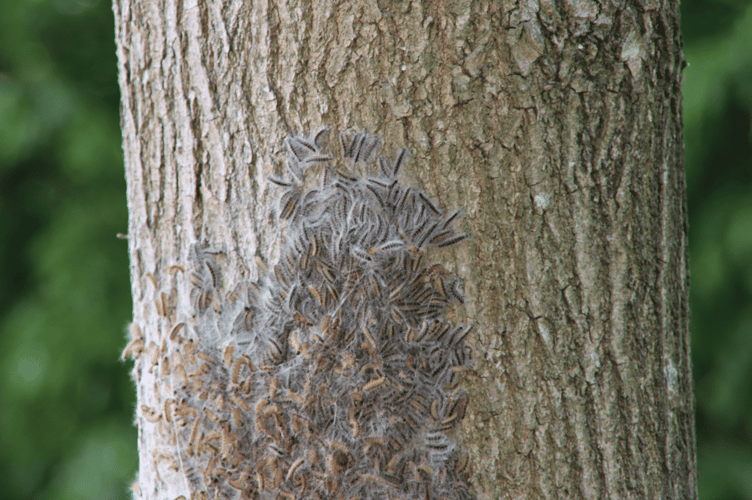
Residents are being urged to stay away from oak processionary moth caterpillars and their nests amid warnings they can pose health risks to people and pets.
The caterpillars, which are active between late spring and early summer, are most commonly found on oak trees and can be recognised by their distinctive nose-to-tail “procession” movement and silky white nests on trunks and branches.
Woking Borough Council said the tiny hairs on the caterpillars contain toxins which can cause itchy skin rashes, sore throats, breathing difficulties and eye irritation if touched or inhaled.
Residents are being advised not to touch or approach caterpillars or nests, to keep children and pets away from affected trees and not to attempt to remove nests themselves.



Cllr Ellen Nicholson, Woking Borough Council’s portfolio holder for green spaces, said: “We understand that sightings of the oak processionary moth can be concerning for residents.
“Whilst the risks are generally low if you keep your distance, it’s important that people know how to recognise the caterpillars and what to do if they see them.
“If you do spot them, please avoid contact and report the sighting so their nests can be removed safely. By reporting sightings and keeping a safe distance, residents can play an important part in helping the relevant authority manage the issue.”
Residents who find nests on private land are being asked to contact the Forestry Commission, while sightings on public land should be reported to Woking Borough Council.
People reporting sightings are asked to provide the precise location and, if possible, a photograph.
Residents that come across an oak processionary moth nest should report it to the appropriate authority.
For nests found on private land, call 0300 067 4442 or email [email protected].
For nests found on public land, call 01483 755 855 or email [email protected].
Comments
We've recently changed our login process. If you have an account for commenting, you will need to re-register on the login window.
This article has no comments yet. Be the first to leave a comment.