
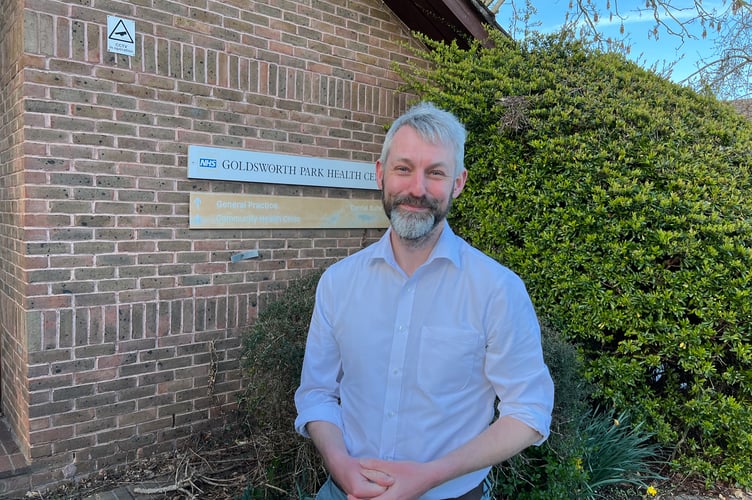
Woking has seen a huge amount of development in recent years, with more proposed at West Hall, but no investment in local health services. This clearly isn’t right.
Across Woking, the number of homes per GP surgery has increased from 3,204 in 2015 to 3,738 in 2025 – it's hardly surprising that people are struggling to get an appointment when they need one!
Lib Dem analysis shows that across the country an eye-watering 1300 surgeries closed in the decade between 2015 and 2025.
That’s why I’m backing our new no doctors, no development policy that would mean that developers are required to properly fund and build GP surgeries to meet increased local needs, as identified by the NHS.



It’s part of our infrastructure first approach to rescuing General Practice and would guarantee the GP surgery contract while new residents are still moving in, ensuring new residents don’t have to turn to over-stretched existing GPs.
Proper investment in primary care will not only cut waiting times but help to relieve the immense pressure on hospitals and emergency services – ensuring only those who really need to access these services do access these services.
We want to ensure everyone can get an appointment within 7 days or 24 hours if urgent.
Delivery of health services is integral to public trust, which has understandably declined in recent years as services have become more and more overstretched. Our new policy is the first step in to trying to change that by ensuring new homes always go hand in hand with more GPs.
Alongside building new homes, our first priority should be improving the housing stock we already have, in particular when it comes to temporary accommodation. Last week, my select committee published a report looking at “Housing Conditions in Temporary Accommodation” – we were appalled by what we found.
Too often, temporary accommodation is so poor that it is unfit for human habitation.
While the Government has acknowledged that temporary accommodation can be of poor quality, the lack of official statistics means we still do not have a clear national picture of just how widespread or severe the problem really is.
The Government is taking steps to improve the quality of accommodation provided to homeless households and strengthen through the National Plan to End Homelessness, but more needs to be done.
Our report makes a number of recommendations to strengthen protections against poor housing conditions. This includes phasing out unsuitable shared and temporary accommodation that cannot meet the new Decent Homes Standard and putting long-term plans in place to ensure a supply of safe, stable housing for those who fall on hard times.
Supporting residents through difficult times is about more than housing alone. Over the past week, I’ve been out and about across Woking, seeing first-hand the work local organisations are doing to help residents through the cost-of-living crisis.
I was pleased to visit Welcome Church to open their new community grocery, offering affordable food from just £5 per shop, alongside vital wraparound support for families who need it most.
I also attended the WeAct volunteer event at WWF and the Woking Chamber of Commerce AGM – in the latter, I updated businesses on the work I’ve been doing both locally and in Parliament.
If you’d like to keep up to date, there are a number of ways to stay in touch. You can sign up to my newsletter at willforster.co.uk, email me [email protected], or follow me on Instagram @forster_will, Facebook.com/WillforWoking or X @WillForster
Comments
This article has no comments yet. Be the first to leave a comment.