
It’s often said we’re a nation of bird lovers, and watching wild birds can be a relaxing experience.
So when you’re outdoors, stop, brush aside your problems and unwind while observing their behaviour.



Several nature lovers have told me they take part in the RSPB charity’s Big Garden BirdWatch, which takes place during the last weekend in January (keep reading, because I’ll discuss this year’s results later), but say it can be disappointing because there are fewer birds around at that time of year; a windy or wet day may mean hardly any birds visit a garden, or none at all.
You’re likely to record higher bird numbers if you take part in a new springtime survey Birds in Greenspaces, launched by the British Trust for Ornithology (BTO).
Rather than taking place over a single weekend in winter, Birds in Greenspaces runs over three months, from 1 April to 30 June. It also differs in that we’re asked to count birds in public access green spaces such as parks, churchyards, school grounds and playing fields, rather than gardens.
Birds in Greenspaces is open to people of all ages and experience levels, on their own or in organised groups. Sightings can be recorded on a paper form, then uploaded later to the BTO’s web page, or a free easy to use app is available for Android and Apple devices.
For full details visit the Birds in Greenspaces webpage at bto.org/greenspaces
The BTO encourages everyone to get involved, to learn about and connect with the wildlife in their local green spaces, and help them build an accurate picture of the birds that share public places with us.
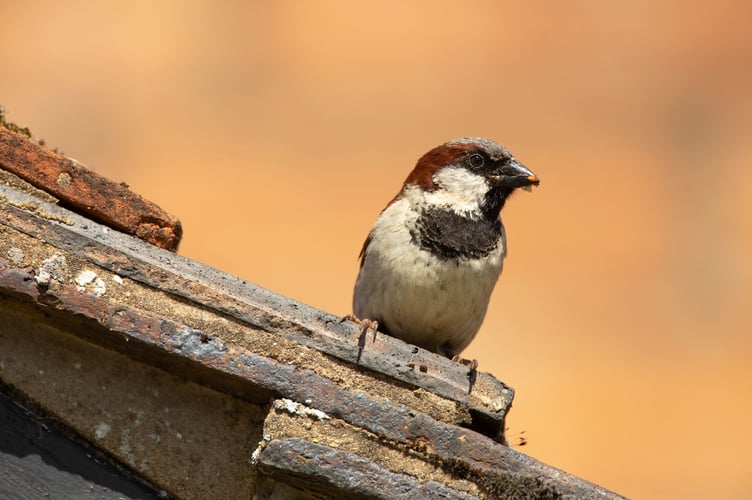
Meanwhile, the RSPB recently announced the results of its Big Garden Bird Watch from January this year, when over 650,000 people took part. Nationally, the house sparrow held on to the top spot, blue tit remained at number two, with starling creeping up one place to third.
Wood pigeon and blackbird were the fourth and fifth most recorded species in UK gardens.
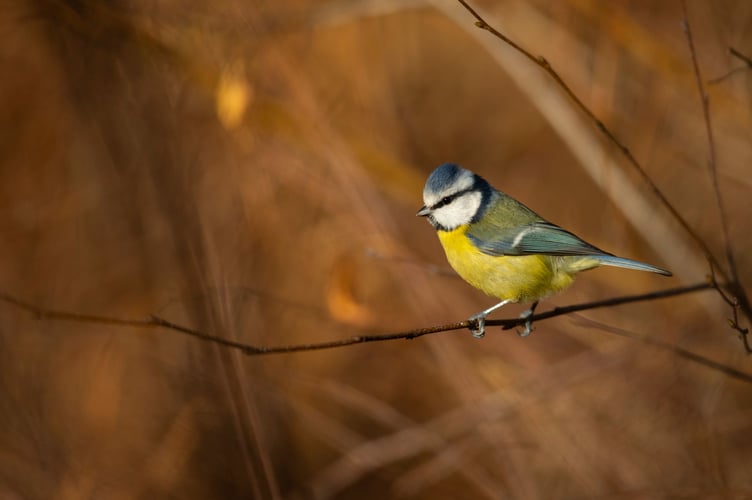
The RSPB provided me with a county breakdown, which reveals a different picture in Surrey: the blue tit was the most frequently spotted, followed in order by wood pigeon, house sparrow, great tit and magpie.
Surrey’s sixth-placed bird was the robin (which I’d expected to be higher) then starling, feral pigeon, blackbird (a decline of 24 per cent since 2025) and jackdaw in tenth place.
Interestingly, the ring necked parakeet is in 17th place in Surrey, with an increase of 25 per cent over last year.
The RSPB said its greatest concern is for the greenfinch, in 17th place nationally and absent from Surrey’s top 20; it has declined by 67 per cent since the Big Garden Birdwatch began in 1979.
Numbers of other finches have also shrunk, but less spectacularly. It was with finches especially in mind that the RSPB issued guidance (which I reported in detail last week) that people should stop filling bird feeders with seed and nuts from 1 May to 31 October to avoid spreading a deadly disease, trichomonosis.
Just one infected bird can turn a busy feeder into a disease hotspot. If birds want seed or nuts they can find them naturally in the wild.
I’m hoping to spend time this weekend idly watching any birds I encounter for, as WH Davies asks in the opening lines of his poem “Leisure”: What is this life if, full of care, we have no time to stand and stare?
Will you do the same?
Comments
This article has no comments yet. Be the first to leave a comment.