
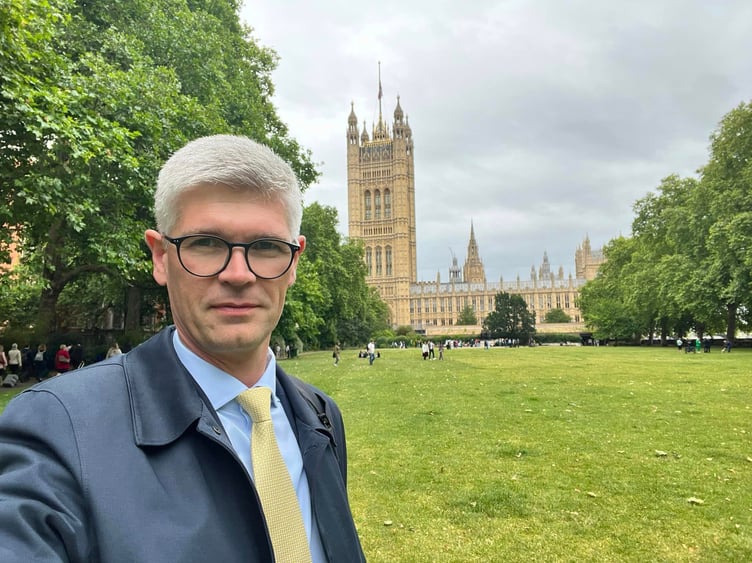
When people think about the role of an MP, their minds often turn to Parliament. The debates, the votes, the drama of the chamber and, occasionally, the rather theatrical cries of “shame” when the Prime Minister refuses to take accountability.
But there is another side to the job that receives considerably less attention. It is one that rarely makes the headlines, seldom features in political broadcasts and, for many MPs, takes up the greatest part of their working day: casework.
Casework comes in all forms. It can be about a pothole that has been left unattended, overflowing bins on a residential street or a delayed response from the local council. These issues matter enormously to the people affected by them, and getting them resolved is an important part of representing a community.
But casework can also be about the most tragic circumstances imaginable. Local fires, devastating accidents, families navigating unimaginable loss, and cases involving the death of a child. The range is vast, and while every case deserves care and attention, some inevitably carry an emotional weight that is difficult to put down at the end of the day.
When you become an MP, you quickly realise that your job does not start and end in Westminster. In fact, so much of what I do is centred around the thousands of emails that find their way into my inbox.
They are there when I stand up in the Chamber. They are there when I am catching a late train from Waterloo back to Brookwood. And they are there when I get home, discussing with my team how best to navigate a particularly difficult case.
It is often the most complex and distressing cases that stay with you. Not because the everyday issues are any less important, but because behind some emails are families experiencing circumstances that most of us could barely begin to imagine.
We approach every case as a team, with the utmost care, sensitivity and dedication. That often means working closely with Surrey County Council, the police, other public services, external organisations and, where necessary, Government ministers and their departments.
Complex and urgent cases are prioritised, and my casework team work tirelessly to make sure that people are heard, that the right questions are asked and that those responsible are held to account where necessary.
Of course, we cannot always deliver the outcome someone wants. An MP cannot simply overturn every decision or resolve every problem. But we can listen, we can challenge, we can push for answers and, importantly, we can make sure that people do not feel they are facing difficult circumstances alone.


That is something I never want to lose sight of.
Being an MP is a privilege, but it is also a responsibility that extends far beyond the walls of Parliament. Behind every email is a person, a family or a community looking for help. Some need a pothole fixed. Others need answers during the darkest moments of their lives.
Both deserve to be taken seriously. And both are why casework matters.
Comments
We've recently changed our login process. If you have an account for commenting, you will need to re-register on the login window.
This article has no comments yet. Be the first to leave a comment.