
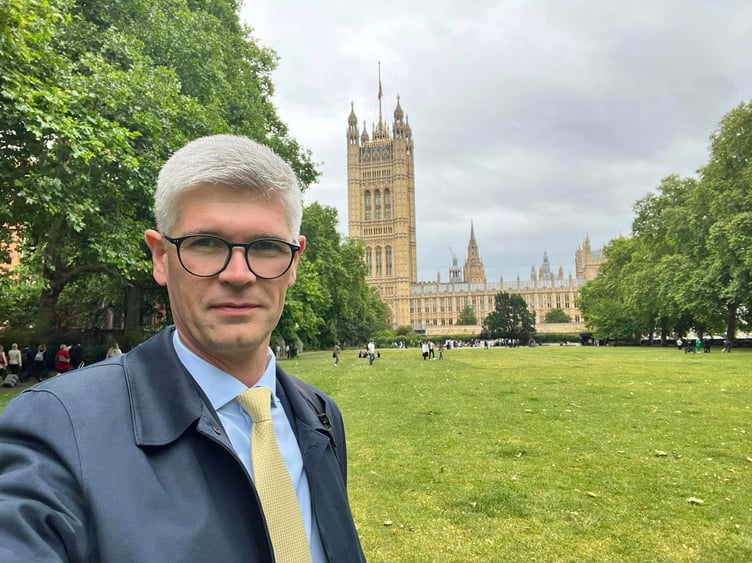
Part of my job - and one that relies upon a lot of behind the scenes work- is securing and then participating in interviews.
Some weeks it feels like I’m bouncing from BBC Politics Live to Any Questions, then straight onto the James O’Brien Show or ITV Meridian.
It’s varied, unpredictable, and no two interviews ever feel the same. Especially when I go from discussing Europe to maternity services.
Sometimes I’m talking straight to the camera. Other times I’m in a radio studio with a microphone the size of my head. Occasionally it’s a quick prerecorded clip grabbed in a corridor somewhere in Parliament.
But whatever the format, interviews give me something really valuable - a chance to explain what I’m working on, why it matters, and who it’s meant to help.
Take Bentley Court. That was a case that landed in my inbox after several elderly residents wrote to me in absolute distress. Their lift - managed by FirstPort - had broken down in March and simply hadn’t been fixed. Months went by. Then the heatwaves arrived.
These poor residents were stuck on the top floor, unable to get out for a food shop, with no working lift and no meaningful communication from the management company. They were, quite literally, trapped in their own homes. One resident spent her final weeks unable to leave her floor.
So my team and I got to work. We contacted the BBC, explained what was happening, and before long a camera crew arrived. They spent nearly two hours filming - talking to residents, talking to me, capturing the reality of the situation.
The piece went out later that week. And whether it was the media attention or simply the pressure building over time, after six long months the lift is finally being fixed.
That’s the power interviews and the media can have. Sometimes you raise an issue, shine a light on it, and things start to move.


But it isn’t always that straightforward. My team can send out dozens of press releases about issues that genuinely matter to people locally - things that affect daily life, safety, wellbeing - and hear absolutely nothing back. Not every story gets picked up, even when it deserves to.
And then there are the moments when the national party is pushing a big policy announcement and suddenly, with barely any warning, I’m asked to appear on camera. No time to prep, no time to rehearse, just a quick briefing and off we go. Those interviews keep you on your toes, to put it mildly.
Still, despite the chaos, I genuinely enjoy this part of the job. Interviews let me speak directly to people - not through long documents or complicated statements, but in real time, in my own voice.
They’re a chance to explain, to challenge, to highlight what’s happening in our community. And sometimes, as with Bentley Court, they help get things fixed.
Comments
This article has no comments yet. Be the first to leave a comment.