
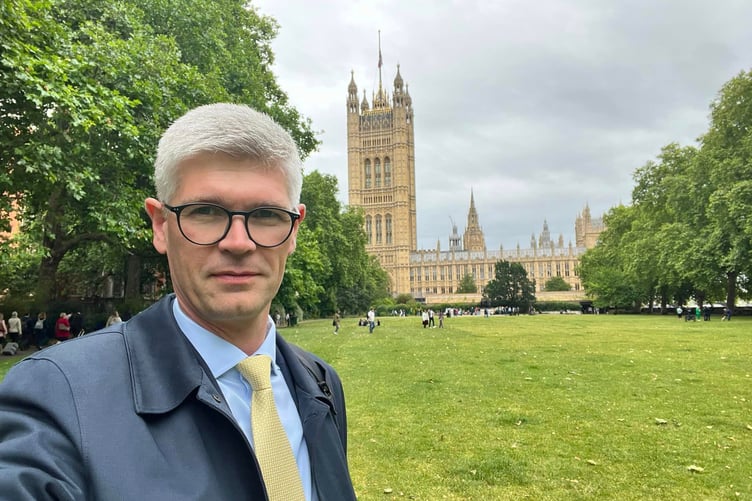
In simple terms, an MP is elected to represent their local area – their constituency – in the House of Commons. That’s the job description most people are familiar with.
But it doesn’t capture what the role looks like in practice. While you might see me standing in the chamber to speak, or walking through the voting lobbies to support or oppose Government legislation, none of that work happens in isolation.
Behind every MP is a team of people doing the less visible but absolutely essential work that allows representation to happen. Without them, the engine simply wouldn’t function. There is a small team in Westminster supporting parliamentary work, such as research and speeches, but the real heart of the job sits much closer to home: the constituency office.
When a new MP is elected, they don’t automatically inherit the staff of the MP who held the seat before them. In many cases – particularly where there has been a change of party – the new MP has to recruit and build a team from scratch.
That can be challenging, because while elections come and go, constituents’ problems don’t pause. From day one, people are still contacting their MP for help.
It’s also worth being clear about something that often gets misunderstood. MPs’ staff are not party political. Caseworkers are employed to represent constituents, not a political party, and they support everyone who contacts the office, regardless of their voting preference.
For me, I believed it was essential to have a constituency office made up of local people. Most are long-standing Surrey Heath residents themselves, with one living just over the border in a neighbouring constituency. They deal with the day-to-day realities of life in Surrey Heath and work tirelessly to make sure local concerns are raised and pursued.
Each day, the office receives hundreds of emails. Some relate to national policy or parliamentary business. Many others raise urgent and deeply personal issues – housing problems, education concerns, visa delays, pension queries, litter, and challenges with health and social care.
An MP’s office can’t force change on its own, but it can advocate – and that advocacy matters. It means writing to Government departments, chasing responses that haven’t arrived, and working with organisations such as charities, councils, and local health services.
It also means making sure I am fully aware of the issues affecting residents, so I can raise them directly in Parliament through speeches or written questions that require a Ministerial response.



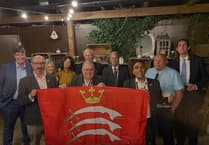
Put simply, my caseworkers tell me what matters locally. There would be little point in speaking in the chamber about issues that have no relevance to the people I was elected to represent. Their work ensures that local voices shape what is said and done in Westminster.
And it doesn’t stop at the end of the working week. Caseworkers regularly support me at constituency surgeries, often on Saturdays, where residents can speak face to face about issues that are difficult or distressing to explain in an email.
A caseworker is always there to listen, record the issue and follow it through.
Much of their work happens quietly and without recognition. But for many residents, they are the first point of contact, the steady voice on the phone, and the reassurance that someone is taking their problem seriously.
In many ways, they are the engine room of effective local representation.
Comments
We've recently changed our login process. If you have an account for commenting, you will need to re-register on the login window.
This article has no comments yet. Be the first to leave a comment.