
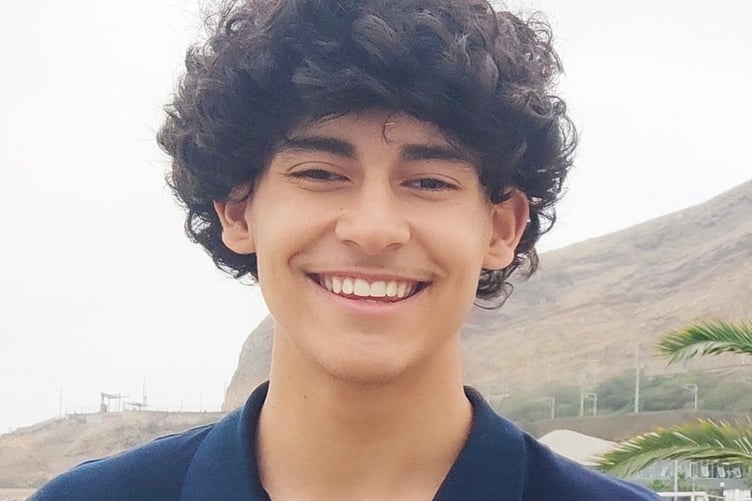
The prosecution and defence have begun their closing speeches as the jury prepares to consider its verdicts in the trial of two teenagers accused of murdering 15-year-old Luis Guembes.
Ms Justice Heather Norton outlined the legal directions to the jury before the prosecution and defence began their closing speeches.
The jury must decide whether Defendant 1 and Defendant 2 are guilty or not guilty of murder of the Farnham schoolboy. If either defendant is acquitted of murder, jurors will consider manslaughter as an alternative verdict.
Jurors must also decide whether Defendant 1 is guilty of conspiracy to rob and possessing a bladed article. Defendant 2 has already pleaded guilty to both charges.
Opening the prosecution's closing speech, Julian Evans KC invited the jury to find both defendants guilty of murder and Defendant 1 guilty of the two additional charges.
Mr Evans urged jurors to carefully assess the evidence given by both defendants, describing their accounts as "mutually inconsistent".
He said: "They come from two people we suggest have every reason to serve their own interests."
The prosecution argued that the pair had put considerable thought into planning the robbery.
It alleged they had lured Luis to the location under false pretences, used photographs and changed telephone numbers to conceal Defendant 1's identity, and taken steps to ensure Luis did not realise he was the intended target.
Mr Evans described the location as a "secluded, quiet, location". The jury heard that Defendant 2 had described the area as somewhere with little police presence, based on his own experience.



Mr Evans told jurors: "When you put all of those matters together we suggest here a considerable degree of thought that has gone into the planning."
He argued that the defendants must have discussed the risks involved in carrying out a knife-point robbery, including what might happen if Luis refused to hand over his phone.
The prosecution alleges that both defendants were involved in the attack at Wildwood, Stoke Park, on January 19, 2026, during which Luis suffered three stab wounds to his head, shoulder and lower back.
The jury also heard about messages exchanged between the defendants and videos recorded by Defendant 1 on the day of the attack.
In one recording, Defendant 1 said: "I stabbed him bro."
The prosecution argued that this amounted to an admission about what had happened shortly beforehand.
However, Defendant 1 denies stabbing Luis and maintains that he made the statement to placate his co-defendant because he was frightened of him.
Defending Defendant 1, barrister Roderick Johnson argued that his client had been drawn into events without understanding that a robbery was planned.
He said Defendant 1 believed he was acting as a lookout and mediator while Defendant 2 recovered money connected to an earlier dispute.
The defence challenged the prosecution's interpretation of the video and evidence concerning an ornamental knife.
Mr Johnson also highlighted that no blood or DNA belonging to Luis was found on Defendant 1's clothing.
He argued that Defendant 2 had organised the events and was responsible for the fatal stabbing.
In her legal directions, Mrs Justice Norton reminded jurors that the burden of proof rested with the prosecution and that they must be sure of a defendant's guilt before returning a guilty verdict.
She stressed that jurors must consider each defendant and each charge separately, basing their decisions solely on the evidence heard in court.
The trial continues.