
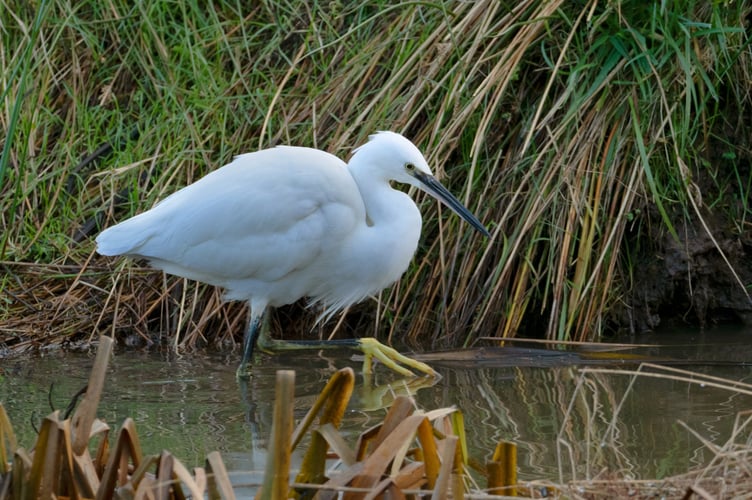
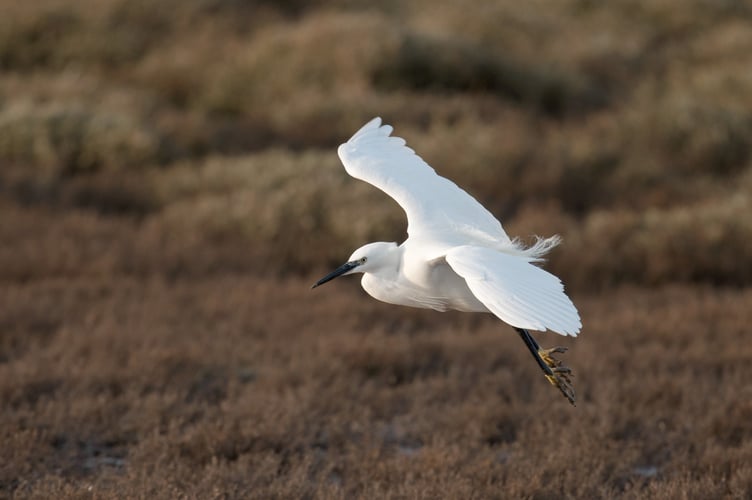
During the recent wet weather I brought to mind my wildlife highlights of last summer. One was observing a pair of little egrets on a New Forest pond during a summertime picnic.




Although the little egret is now a familiar sight on lakes, large ponds and other wetland habitats throughout much of the UK, especially in southern England, this small white heron was a rare sight on our shores until the 1980s, only appearing occasionally as a visitor from continental Europe.
Little egrets, and other egret species across the globe, were hunted almost to extinction in Victorian times when it was fashionable for high society ladies in London and New York to wear exotic hats and other items made from bird feathers.
Egrets were slaughtered in great numbers for their beautiful feathers, especially during the breeding season, when their feathers were especially prized.
Before the arrival of the little egret, the grey heron was the only species of nesting heron in the UK. The little egret is smaller, all-white with white plumes on its crest, back and chest, black legs and bill and bright yellow feet.
Little egrets only began appearing on our shores in significant numbers during 1989, when more than 100 of the birds were recorded. They first nested in the UK in Dorset in 1996; within five years the UK breeding population exceeded 100 pairs.
By 2015, this figure had risen to over 1,000 nesting pairs in England, Wales and Northern Ireland. The first Scottish breeding took place in 2020, putting the little egret firmly on the map as a UK-wide breeding bird.
Birdwatchers across the UK have been charting the rise and rise of the little egret, but scientists were unable to accurately calculate the breeding population of this relative newcomer.
Now, research by the British Trust for Ornithology (BTO) is shedding new light on both their numbers and geographical spread, which it says was likely influenced by climate change, increasingly mild winters allowing a higher survival rate.
The BTO adds that its ability to breed at just one year old, and the absence of competition from other egrets following colonisation, probably helped it spread across the country.
Ian Woodward, BTO senior research ecologist and lead author of the research paper, said: “Having accurate species’ populations helps researchers and conservationists understand the relative importance of UK populations internationally, and the national importance of individual UK sites.”
However, estimates have proved tricky to assess as little egret numbers have grown, due to a number of factors. Initially, the novelty of the newly colonising birds ensured that most nests were monitored.
The BTO explained that birdwatchers also contribute egret nest counts via the long-running BTO Heronries Census, and hundreds of records are submitted to the Rare Breeding Birds Panel (RBBP), which enable annual counts to be reported.
However, as colonies grew and the birds expanded their range, it became much more difficult to undertake comprehensive counts.
BTO researchers have now used mathematical techniques to account for data gaps, and concluded that the little egret population is likely higher than the maximum estimate of 2,236 nests in 2022, as nests can sometimes be surprisingly difficult to locate and count even at known colonies.
The scientists behind this study hope they will now be able to apply these new and improved methods for estimating population size to similar colonising species.
It’s fantastic that the beautiful little egret is now an established UK resident. Long may it thrive!
Comments
This article has no comments yet. Be the first to leave a comment.