
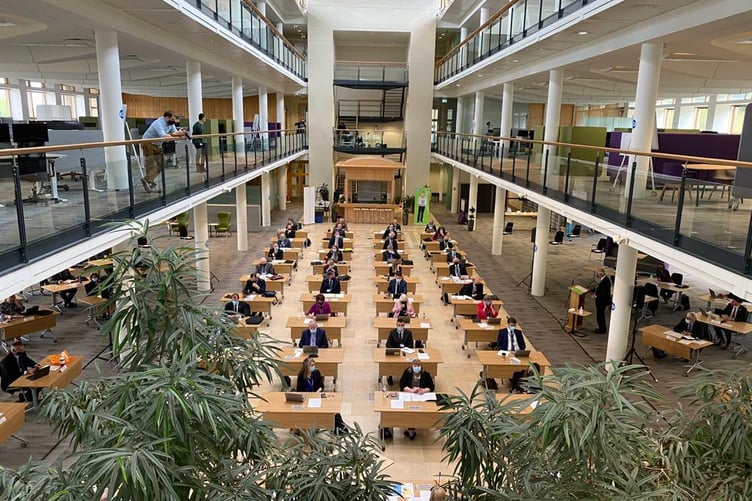
Councillors were told this week at an Audit and Scrutiny meeting that the council had done what it could to fix the weaknesses in alternative provision. This is education arranged for children who are excluded, too unwell to attend school, or waiting for specialist placements.
All 12 actions set out in an internal audit have been ‘completed’, including four assessed as high risk. Those risks warned they could leave children without proper education and put the council at risk of breaking the law and failing its legal duties.
But the same report admits that some of the most basic problems (like clear, easy to understand central guidance for staff and school) are still being worked on and will not be fully embedded until next year.



A report to councillors says the council has completed all 12 actions it was told to take after an internal audit found major weaknesses in ‘alternative provision’. Meaning, the education arranged for children who are excluded, too unwell to attend school, or waiting for specialist placements.
The original audit, carried out in summer 2025, gave the council only ‘partial assurance’. In plain terms, that means systems were not working properly. It found staff were often unclear about who was responsible for what, records were patchy, and children’s placements were not being regularly checked.
In one sample, only 13 per cent of children had evidence their alternative education was being reviewed. In nearly half of cases, there was no clear record explaining why decisions had been made.
Alternative provision is expensive and important. Surrey spends around £15 million a year on it. The council also has a legal duty to make sure children who cannot attend school still receive a suitable education.
Officers say things have improved. They told councillors that roles are now clearer, data has been cleaned up, and more children are being placed with approved providers. Four out of five children receiving alternative provision are now supported through the council’s official list of vetted providers.
But councillors accepted the system still has weaknesses. One of the biggest problems raised by the audit was the lack of simple, central guidance for staff dealing with alternative provision. While guidance has been written and shared, officers confirmed it still needs to be adapted for different audiences and properly rolled out.
That work is now part of a wider review of the whole alternative provision system, running until spring 2026.
Parents’ experiences remain mixed. The council said complaints have gone down, but councillors acknowledged continued confusion about when the council must step in, especially for children who are not attending school full-time.
Councillor Helen Clack said the service is still changing. “It is all very complex,” she said. “But when parents have a clear list of approved providers, we should see much better coordination.”
Councillors also warned the process needs to be more consistent, so children are not treated differently depending on where they live. While officers say the council has made progress, councillors accept the work is not finished and families are still waiting to see the full changes in practice.
Comments
We've recently changed our login process. If you have an account for commenting, you will need to re-register on the login window.
This article has no comments yet. Be the first to leave a comment.