
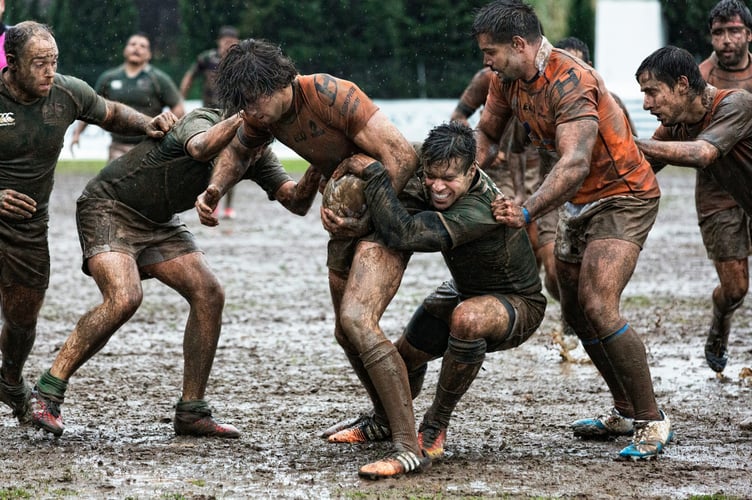
Rugby union may not dominate the conversation in a town better known for H.G. Wells and its position on the Waterloo line, but Woking RFC has been quietly building something worth talking about: a grassroots club that measures its success as much in friendships and volunteers as in league positions.
A Club With Deep Roots
The club's origins stretch back to 1931, when it was established as Vickers RFC at Byfleet, serving workers at the nearby Brooklands factory.
After several name changes tied to successive owners of those works (BAC RFC, British Aerospace RFC), the club was reformed as Woking RFC in 1990 and has operated from Byfleet Recreation Ground ever since.



.jpeg?width=209&height=140&crop=209:145,smart&quality=75)
The pitches at Byfleet Rec are shared with other local sports groups, and for generations the club has been a part of the borough, where people from all walks of life could find a team, a routine, and a sense of belonging.
Life in the Surrey Counties Leagues
While it's no Super Rugby schedule, Woking RFC compete in Surrey Counties Four, level ten of the English rugby pyramid.
Promoted into the division at the start of the 2024/25 season, the club has been working to establish itself at this level ever since.
The current campaign has proved a stern test, with the side sitting eighth in a nine-team division, but head coach Mark Rose and his squad are not short of motivation.
The competitive standard in the Surrey Counties structure is higher than the tier number implies, but Woking RFC’s promotion was made possible by the team training together every Wednesday evening at Byfleet Rec.

The Challenges Ahead
Sustaining a grassroots club in one of England's most expensive commuter boroughs brings its own challenges.
The club is keen to revive a junior section, though in a borough where younger families are frequently priced out of the area, it has not sustained one since the late nineties.
There are trends of a broader decline in adult male participation, accelerated by a number of factors, and clubs in high-cost-of-living areas tend to feel it most acutely.
Looking Ahead
Despite all of that, Woking RFC continues to recruit, train, and compete, with a strong social side that remains strong. The club has survived factory closures, name changes, and a global pandemic. For a club approaching its centenary, the foundation of participation, volunteers, and support is more resilient than you might think.
Comments
This article has no comments yet. Be the first to leave a comment.